


24-06-2015, 19:46
Hi,
Don't forget that for our Australian friends, the "Record" UV Index is over 17. And apparently the highest ever recorded was over 43, but that was up a mountain ! IMHO Steve's pragmatic solution with Cumulus, to offer a calibration "multiplier" (and perhaps an "offset"), may be the best solution.
It seems that UV is diffused by the atmosphere more than visble light, so the correct "Cosine Response" is more important. If the sensor itself has a good Cosine Response, then beware that any "window" above it may severely upset the shape, due to high surface reflection at low angles. A good demonstation of this is the "Harry Worth Shop Window" scene:
If I understand correctly, you shouldn't use a "clear" window but a diffusing window, which is why (white) Teflon or PTFE is often used. Recently I found this PDF which I found most informative. Bear in mind that the guy spent at least a year of his life preparing it (his master's degree), and there's lots of maths that you won't want to bother with. But it's the only document I've found so far that gives some practical details about designing UV (and Visible) diffusers. See for example the diagrams on page 4.
PTFE/Teflon sheet seems to be available quite cheaply, for example from ebay. But all that I've found so far is specified for its mechanical properties; I've found nothing concering the optical parameters of the sheets being offered.
Cheers, Alan.
(24-06-2015, 16:08)Werk_AG Wrote: The maximum value that we can get at the ADC1 variable, is 1023, which should correspond to a UV Index greater than 11.
Don't forget that for our Australian friends, the "Record" UV Index is over 17. And apparently the highest ever recorded was over 43, but that was up a mountain ! IMHO Steve's pragmatic solution with Cumulus, to offer a calibration "multiplier" (and perhaps an "offset"), may be the best solution.
It seems that UV is diffused by the atmosphere more than visble light, so the correct "Cosine Response" is more important. If the sensor itself has a good Cosine Response, then beware that any "window" above it may severely upset the shape, due to high surface reflection at low angles. A good demonstation of this is the "Harry Worth Shop Window" scene:
If I understand correctly, you shouldn't use a "clear" window but a diffusing window, which is why (white) Teflon or PTFE is often used. Recently I found this PDF which I found most informative. Bear in mind that the guy spent at least a year of his life preparing it (his master's degree), and there's lots of maths that you won't want to bother with. But it's the only document I've found so far that gives some practical details about designing UV (and Visible) diffusers. See for example the diagrams on page 4.
PTFE/Teflon sheet seems to be available quite cheaply, for example from ebay. But all that I've found so far is specified for its mechanical properties; I've found nothing concering the optical parameters of the sheets being offered.
Cheers, Alan.
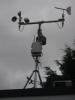

![[Image: SR_UV_new05.jpg]](http://www.meteocercal.info/forum/images/01forum_img/SR_UV_new05.jpg)


 Thank you for your help again, Werk_AG. I think, our formula has to be:
![[Image: UVIcalculating.png]](https://brandys.my-meteo.net/MyDocs/UVIcalculating.png)


![[Image: UV_formula.JPG]](http://www.meteocercal.info/forum/images/01forum_img/UV_formula.JPG)
![[Image: graphUV.php]](http://www.meteocercal.info/images/graphUV.php)
![[Image: MeasuredByMe.png]](https://brandys.my-meteo.net/MyDocs/MeasuredByMe.png)
![[Image: MeasuredByCHMU.png]](https://brandys.my-meteo.net/MyDocs/MeasuredByCHMU.png)