Thread Rating:
  • 1 Vote(s) - 3 Average
  • 1
  • 2
  • 3
  • 4
  • 5

UV sensor for WeatherDuino Pro2 weather station
#11

(21-06-2015, 21:22)JT118 Wrote:  Would these do as a cover with the sensor mounted in, for example a , piece of 22mm conduit pipe with this as a lense?
http://www.ebay.co.uk/itm/Watch-Glass-Ac...5d5563789b

Who knows? Smile
Using a lens like that can be a good idea to cover a hole for the UV sensor... I'm registering it.
I like to build things, I'm always trying different approaches.

Those are from the last one: Fast and cheap to build, using the box of a garden solar light (less than 5€)

[Image: SR_UV_new03.jpg]
Note: Original PV cell was removed and changed by a better quality one

[Image: SR_UV_new06.jpg]

Trying to assemble the UV sensor and the PV cell (for the Solar Radiation) on the same piece, seems to me the best option (keeping the cables short, between the sensors and the Solar/UV interface board)

Anyway, I think that will be very interesting watching the thousand ways that each person will find to solve the main problem. Protect the electronic from weather elements (rain, hail, temperature, etc), and at the same time don't put materials too thick (or not transparent to desired radiation. From UV to IR, if for both sensors Confused) in front of the sensors.

Reply
#12

http://www.ebay.co.uk/itm/400834029785?_...EBIDX%3AIT

bought one of these; probably the wrong thing but might work.

.pdf uv sensor.pdf Size: 197,69 KB  Downloads: 313
Reply
#13

(21-06-2015, 22:34)JT118 Wrote:  http://www.ebay.co.uk/itm/400834029785?_...EBIDX%3AIT

bought one of these; probably the wrong thing but might work.

Not without significant changes in the code (range of output voltages is completely different).
But the worst is that, at least as a starting point, you don't know the correspondence between output voltage and the UV Index.

Why not, try to build within the specs of the WeatherDuino Pro2 system? The UVM-30A is a good sensor. You can find here the specifications:
http://www.meteocercal.info/forum/Thread...r-Stations

Reply
#14

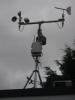
Here's a picture of a UV sensor suite, out in the field, well ok, on the side of the house Smile

[Image: IMG_0682.jpg~original]

As you can see from my weather pages, it's working brilliantly!

[Image: solar.png~original]
Reply
#15

(22-06-2015, 12:45)uncle_bob Wrote:  As you can see from my weather pages, it's working brilliantly!

Good work, congratulations ...

Best Regards
Zdenek

Brandys/L Weather
Reply
#16

(21-06-2015, 21:17)Werk_AG Wrote:  We will continue... 

Hello,

I'd like to tell you something about my experiments ...

I've tried about 10 various materials. Two of them are "release candidates" - front CD cover (but only that very thin) and slide/glass from the old EEPROM:
 
[Image: DSC_4914-upr.jpg]

I have many many troubles with my measurement, because of the very bad weather at our country now But tentative "research" findings are already clear. The transmission of the used materials is nearly linear - but it applies only for intensity of sun radiation. I have no option to identify UVA or UVB part of the sunshine. And I haven't had option to do enough measurements, so results are only approximate:
 
[Image: Measurement.png]

Another possibilities to build UV sensor cover is for example:
(21-06-2015, 21:22)JT118 Wrote:  Would these do as a cover with the sensor mounted in, for example a , piece of 22mm conduit pipe with this as a lense?
http://www.ebay.co.uk/itm/Watch-Glass-Ac...5d5563789b

Or using any filter from Hoya U-340 glass for 365 nm UV-pass filter, for example:
http://www.ebay.com/itm/Hoya-U-340-37mm-...43dd21bbbb

I think it would be the best solutions but not cheap enough ... Sad

But the best thing is that there is possibility to prepare (nearly) universal RX module code, with a paramater "transmission". Our formula then is:

[edit]This text isn't correct now, read more, please ...
IndiceUV = ((((ADC1 * 1 / Transmission ) - 135.0) * 11.0) / 1024.0) ;
[/edit]

Transmission measurement is very easy for everybody. Requires only to buy 2 sensors UVM-30A (not only one) and simultaneously do two measurement, with cover and without cover. The accuracy specified for UVM-30A is +-1 UVI, we have to think about it a do some corrections when the both sensor are not exactly the same.

I will buy that 365 nm UV-pass glass, when it arrive here, I'll publish another measurement. Maybe it will be summer in that time at us too ...Smile
Reply
#17

Hi Zdenek

With great respect to your work, I still think that your formula will produce too low results.
Consider this situation:

The maximum value that we can get at the ADC1 variable, is 1023, which should correspond to a UV Index greater than 11.
Transmission factor of the cover = 1 (uncovered)

Using your formula:

IndiceUV = ((((1023 * 1 / 1 ) - 135.0) * 11.0) / 1024.0) ;
IndiceUV = 9.539

Even when the sensor reaches its maximum output voltage, we never get a UV index greater than ~9.5

I think I know where is your mistake. Your are considering, that ADC1 value corresponds to output voltage, but is only the raw output of the ADC (from 0 to 1023)

Reply
#18

(24-06-2015, 16:08)Werk_AG Wrote:  The maximum value that we can get at the ADC1 variable, is 1023, which should correspond to a UV Index greater than 11.
Transmission factor of the cover = 1 (uncovered)

Using your formula:

IndiceUV = ((((1023 * 1 / 1 ) - 135.0) * 11.0) / 1024.0) ;
IndiceUV = 9.539

Even when the sensor reaches its maximum output voltage, we never get a UV index greater than ~9.5

I think I know where is your mistake. Your are considering, that ADC1 value corresponds to output voltage, but is only the raw output of the ADC (from 0 to 1023)

Hi, Werk_AG,

thank you for your reply and yes, you are right, definitely ... I didn't realize, that ADC1 is only value from TX module, not real voltage from UV sensor. Sad When I tested my UV sensor, I have separate Arduino Mega with output to LCD and measured it on this polygon.

Never mind, my thoughts about the correctness of principle that formula is, in my opinion, true. I have to only change some constants in it. I'll continue ... Wink

Thank you for correction!

Best Regards
Zdenek

Brandys/L Weather
Reply
#19

Zdenek

I like the idea to include something in the formula to compensate the attenuation caused by the sensor covering material.
So maybe something like this would be more appropriate:

IndiceUV = (((ADC1 * 12.0) / 1023.0) * (1 / Transmission));

I know this formula is despising (again) the nonlinear response of the sensor output voltage between UV Index 0 and UV Index 1 (this zone of the readings is the less significative).

As said before, your work in this matter is greatly appreciated, so, please continue...

Quote:When I tested my UV sensor, I have separate Arduino Mega with output to LCD and measured it on this polygon.

This explain some things to me.
If possible, try to do your tests with the UV sensor connected to the TX unit, creating test conditions as close as possible to real use conditions.

Reply
#20

Some considerations about possible materials to cover the sensor.

The UV sensor used on the Uncle Bob unit (shown in this post), is covered with a small piece of polystyrene (from a CD cover).

[Image: SR_UV_new05.jpg]

"The polystyrene plate is virtually opaque to light of wavelengths 200 nm to 275 nm, with the background absorbance dropping quickly with wavelengths above 275 nm to a value of 0.400 at 300 nm and less than 0.050 by 375 nm. Polypropylene, while equally opaque at 200 nm shows slightly less absorbance than polystyrene in the lower UV wavelengths. Polypropylene decreases rapidly from approximately 3.000 at 230 nm to less than 1.000 at 240nm, with a slight secondary peak from 250nm to 290 nm"

Considering the spectral response of the UVM-30A, a polystyrene cover seems suitable. Response bellow 275nm is almost zero.

I'm now starting to investigate Liquid Optical Clear Adhesives (LOCA).
Some are completely UV transparent.

Reply


Users browsing this thread: 1 Guest(s)