Posts: 122
Threads: 11
Joined: Dec 2016
Country:

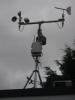
Thanks for the response. I thought this maybe the case. This unit is well made and not crappy plastic. The bearings for the cups is also very good almost as good as the inspeed ones
Posts: 168
Threads: 0
Joined: Feb 2015
Weather Station: Fine Offset (various)
Country:

20-08-2018, 10:33
(This post was last modified: 20-08-2018, 11:25 by
AllyCat.
Edit Reason: Interrupt pulse input requirement.
)
Hi,
Initially, it's probably a "hardware" issue. Provided that 12 volts is sufficient to operate the anemometer (and you're using a 12 input supply/battery) then you should be able to pick up the 12 volts on pin 1 of the Wind connector.
More of an issue is that (unlike some microcontrollers) it appears the Arduino/Atmel architecture uses (some) separate pins for Digital and Analogue inputs, and a digital-only pin (D3) is connected to the Wind Speed input (pulses). In particular, it appears that only two pins are available as the "interrupts" for the Anemometer and Rain Pulses. But it looks as if the immediately "opposite" pin (in the other row of the Nano) is currently an "unused" analogue input (A6).
I'm afraid I'm not yet "up to speed" on the Arduino/Atmel software and hardware possibilities, but I think it should be "possible" to link those two pins on the underside of the PCB and a modification to the software could be "reasonably straightforward".
However, it may also be relevant which Wind Direction sensor you plan to use?
Cheers, Alan.
Posts: 122
Threads: 11
Joined: Dec 2016
Country:
This unit is powered by 12 to 24V but its output is a stepped voltage to a max of 5V dc. These are not correct figures but say the unit is spinning at 10m/s it is outputing 1.2V and at 20m/s its putting out 2.8V and at 34m/s it is putting out 4.8V I think the specs are actually 5 divided by 34 is the stepping so it is 34 steps at 0.147v. The adc would need to read this stepping and do the internal calculation for wind speed. it is 0 to 34m/s
Posts: 168
Threads: 0
Joined: Feb 2015
Weather Station: Fine Offset (various)
Country:
20-08-2018, 21:20
(This post was last modified: 20-08-2018, 21:23 by
AllyCat.)
Hi,
I would have expected the output to be a more continuous (analogue) scale than 1 m/s steps; that's ~2 mph or 3 km/hr which seems a rather poor resolution and makes the "start-up" specification of 0.2 - 0.4 m/s rather meaningless.
The arduino ADC has 1024 levels so it could easily recognise ~34 levels if required (I believe the maximum is actually specified as 32.4 m/s). But if there are only ~34 steps, it will be quite important to know if the output value is "rounded" or "truncated", e.g. does the first step (~150 mV) represent a windspeed range of 0.5 to 1.5 m/s or 1.0 to 1.99 m/s ?
If the output is nearer to a a true analogue ramp, then calibration of the ADC may become more of an issue, but the 5 volt regulator / reference should be accurate to within a few percent and could be calibrated against a multimeter if necessary.
At least the cable connections seem to be clearly defined and these anemometers are also available in USA. But sadly i haven't seen a European seller, or even one offering shipping to Europe.
Cheers, Alan.