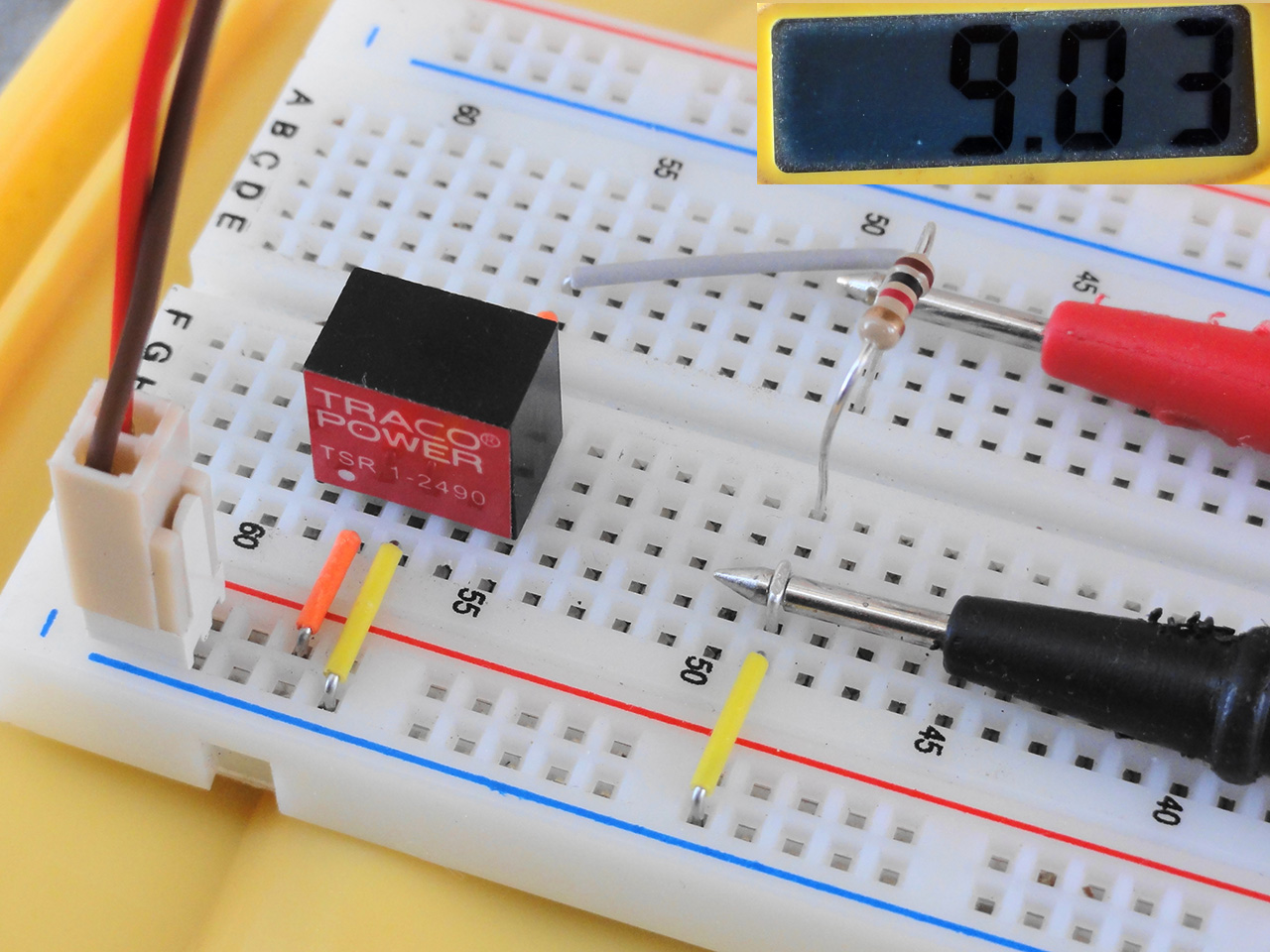
Following this discussion, I compared the output of three 9v regulators under particular conditions of systematically fluctuating input voltage.
Models used were:
TSR 1-2490 - TRACOPOWER DC/DC CONVERTER, 9V, 1A, STEP DOWN:
http://assets.tracopower.com/TSR1/docume...asheet.pdf
L7809CV - STMICROELECTRONICS IC, V REG +9.0V, 7809, TO-220-3, 1.5A:
http://www.farnell.com/datasheets/1805459.pdf
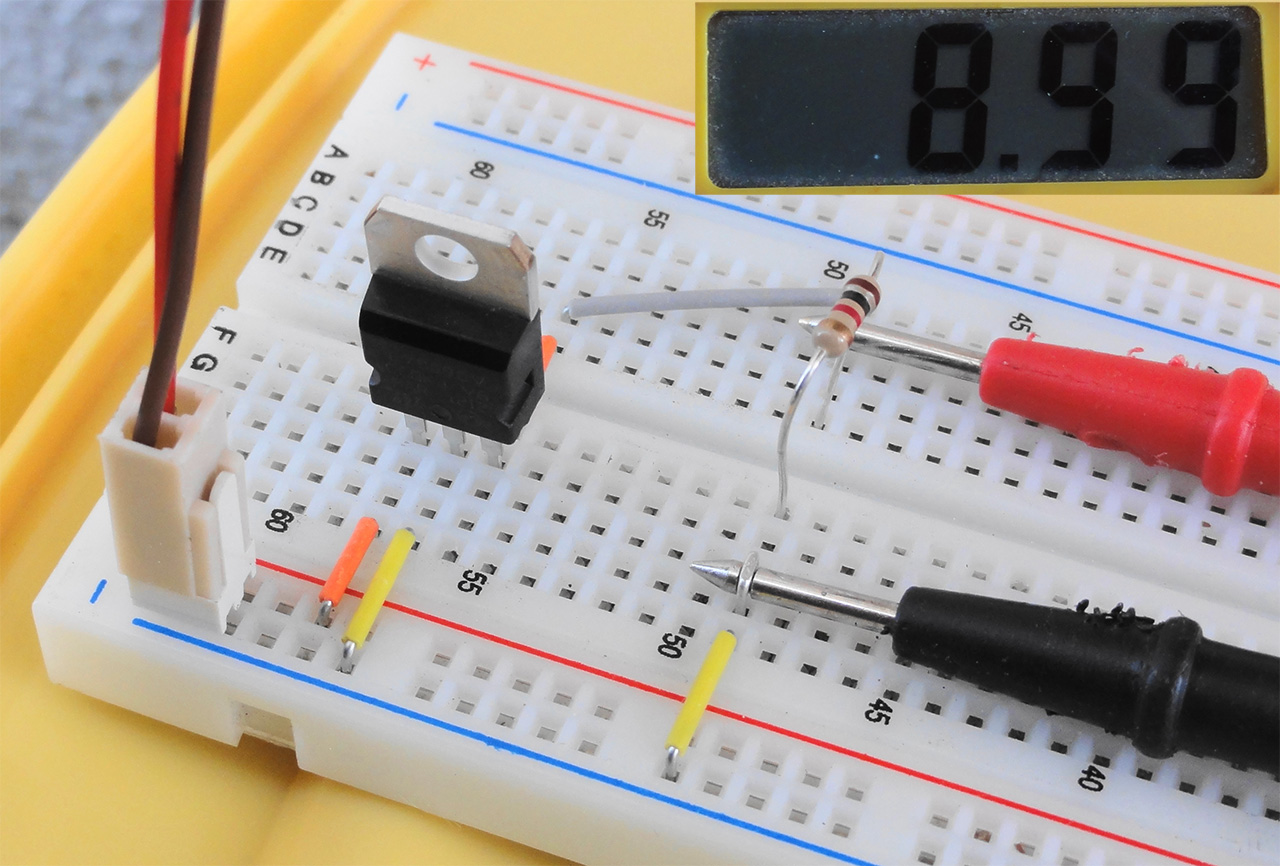
LM7809ACT - FAIRCHILD SEMICONDUCTOR LINEAR VOLT REG, 1A, 9V, TO220AB-3:
http://www.farnell.com/datasheets/1855686.pdf
These were brad new units, connected to the 12v output of a Isofoton Isolder 20 D (v.2, old model) solar regulator. The regulator does not seem to regulate battery charge voltage and the 12v output for appliance use separately. Hence the voltage fluctuation, particularly with high irradiation.
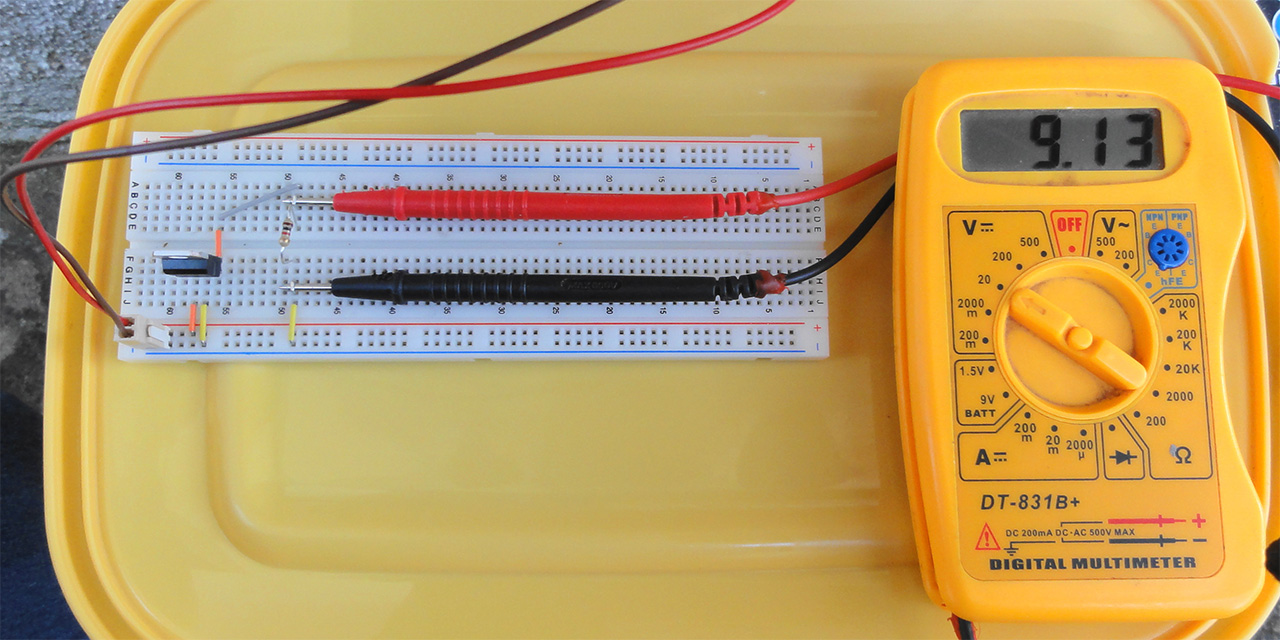
A 1 KOhm resistor was used to provide a dummy load. Ambient temperature was around 18º (see pictures with test assembly below).
A
DT-831+ digital multimeter was used to measure the output voltage.
RESULTS Observed
All three regulators provided a
stable output voltage regardless of the fluctuating input (steadfastly ranging from 13,8 to 14,9v - see video of conditions below).
Out voltages measured were:
- TSR 1-2490 -> 9.03v
- L7809CV -> 9.13v
- LM7809ACT -> 8.99v
CONCLUSIONS, assuming the multimeter is to be trusted:
- the best performer in terms of voltage accuracy seems to be the LM7809ACT.
- the additional 0,5A provided by the L7809CV come with a cost accuracy wise.
- the TSR 1-2490 DC/DC converter seems to provide an accurate output as well with the advantage of not heating and likely being more efficient/wasting less energy while converting but it costs ~7 times more than the LM7809ACT and it may eventually produce some noise.
Video with input voltage condition while testing the regulators:
http://youtu.be/A3FSooBZYzY
L7809CV & general assembly:
 LM7809ACT detail:
 TSR 1-2490 detail: